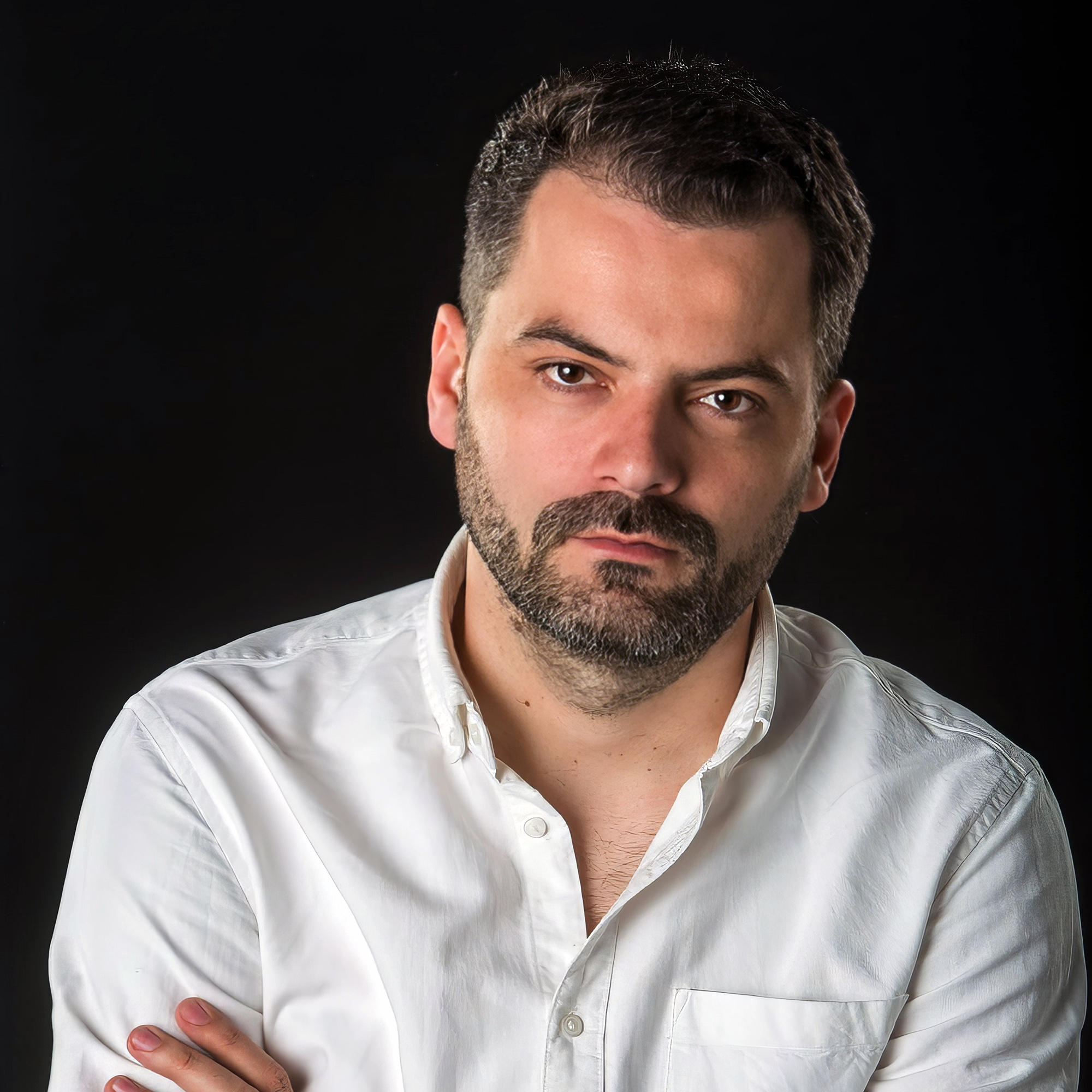

Milija Čpajak explores the dialogue between nature and constructed form, where concrete, organic growth, and ephemeral materials reveal transformation, impermanence, and the quiet logic of change.
Although still at an early stage of his career, Milija Čpajak has already established a distinctive and compelling artistic presence. His works are held in private collections across Europe, Asia, and North America, attesting to the originality and conceptual clarity of his sculptural language. Čpajak’s practice focuses on the dynamic relationship between natural processes and human-made forms, exploring how growth, decay, and transformation shape both the organic world and human existence.
Within his sculptures, robust concrete blocks coexist with delicate sprouting shoots, while ephemeral materials—such as a snake’s shed skin—are preserved as potent symbols of renewal and cyclical change. These carefully orchestrated juxtapositions function as visual essays on transformation, suggesting that what appears permanent is, in reality, in a constant state of flux. His approach resonates with pre-Socratic philosophy, particularly Heraclitus’ notion of the unity of opposites and the perpetual motion of all things. The works thus become meditations on the paradox of stability, reminding us that survival depends on the capacity to adapt, evolve, and transform.
Although Čpajak’s visual vocabulary is unmistakably contemporary, his sensibility carries subtle echoes of Serbian cultural heritage. Themes of cyclical growth, the tension between fragility and solidity, and the rhythmic interplay of form and surface recall elements of folklore, the geometric abstraction of traditional kilims, and the spiritual atmosphere of medieval frescoes. These cultural undertones enrich the conceptual depth of his practice without imposing a fixed narrative.
By aligning artistic creation with natural processes, Čpajak positions nature not merely as a subject, but as an active collaborator and guiding force. His sculptures invite viewers to reconsider the interconnected forces that shape life and matter, emphasizing that change is not only inevitable but essential. In this way, his work serves as a quiet yet resonant reminder of humanity’s place within the broader, ever-shifting ecology of the world.